Transforming back-office FinTech tooling for maximum operational efficiency.
PayConsole is an enterprise back-office platform designed for Financial Operations (PayOps) teams to diagnose, manage, and resolve payment lifecycle issues for travelers and partners at scale.

Overview
PayConsole is an enterprise back-office platform designed for Financial Operations (PayOps) teams to diagnose, manage, and resolve payment lifecycle issues for travelers and partners at scale.
Problem
Prior to this initiative, PayOps workflows were fragmented across legacy tools and manual processes — introducing high operational risk, compounded by the upcoming deprecation of legacy SAP tooling.
Goals & success metrics
The objective was to execute a seamless lift-and-shift into PayConsole with zero disruption to daily operations:
- 99% action success rate across system logs
- 4.0/5.0 CSAT user satisfaction target
My role
Led the end-to-end design strategy to migrate legacy financial tools into PayConsole. Focused on respecting agents' established mental models while eliminating context switching and cognitive load.
Confidentiality note: To comply with my non-disclosure agreement, I have omitted confidential information in this case study. The nature of this work is strictly confidential. Please don't disclose or use this information other than reviewing my work.
Kickoff
To align multidisciplinary stakeholders early, I led a kickoff meeting with the Product Manager and Engineering Manager to gather key context and set the initial project direction.
Strategic alignment
Uncovered core problem definitions, target user profiles, business rationale, and expected KPIs/metrics.
Ways of working
Clarified role expectations, team collaboration norms, and established recurring weekly UX syncs.
UX brief document
Synthesized stakeholder inputs into a formal UX brief document to anchor the project.
Discovery
To define our MVP, I needed to understand the current FinOps tooling landscape, map the end-to-end agent journey, and identify must-have capabilities.
Method #1: AI-assisted desk research
I began with desk research — using internal knowledge bases and AI tools to audit legacy SAP systems and catalog all existing system capabilities.
Method #2: FinOps user interviews
While desk research established what the tooling could do, I partnered with the PM to conduct user interviews with CS Finance agents to understand how they actually used these features in their day-to-day work and uncover friction points in the existing workflows.
Strategy
Key findings: mapped CS Finance user journey
By mapping the CS Finance user journey, we translated each phase of the troubleshooting lifecycle into the core must-have features required for PayConsole's MVP:
Receive escalation
Cases arrive via external ticketing platforms (Zendesk, TED, or PEGA).
Cross-linking
Between original ticketing systems and PayConsole to preserve case context and eliminate manual navigation.
Investigate the issue
Agents look up bookings or financial transactions using various identifiers, and inspect the money paper trail.
Search
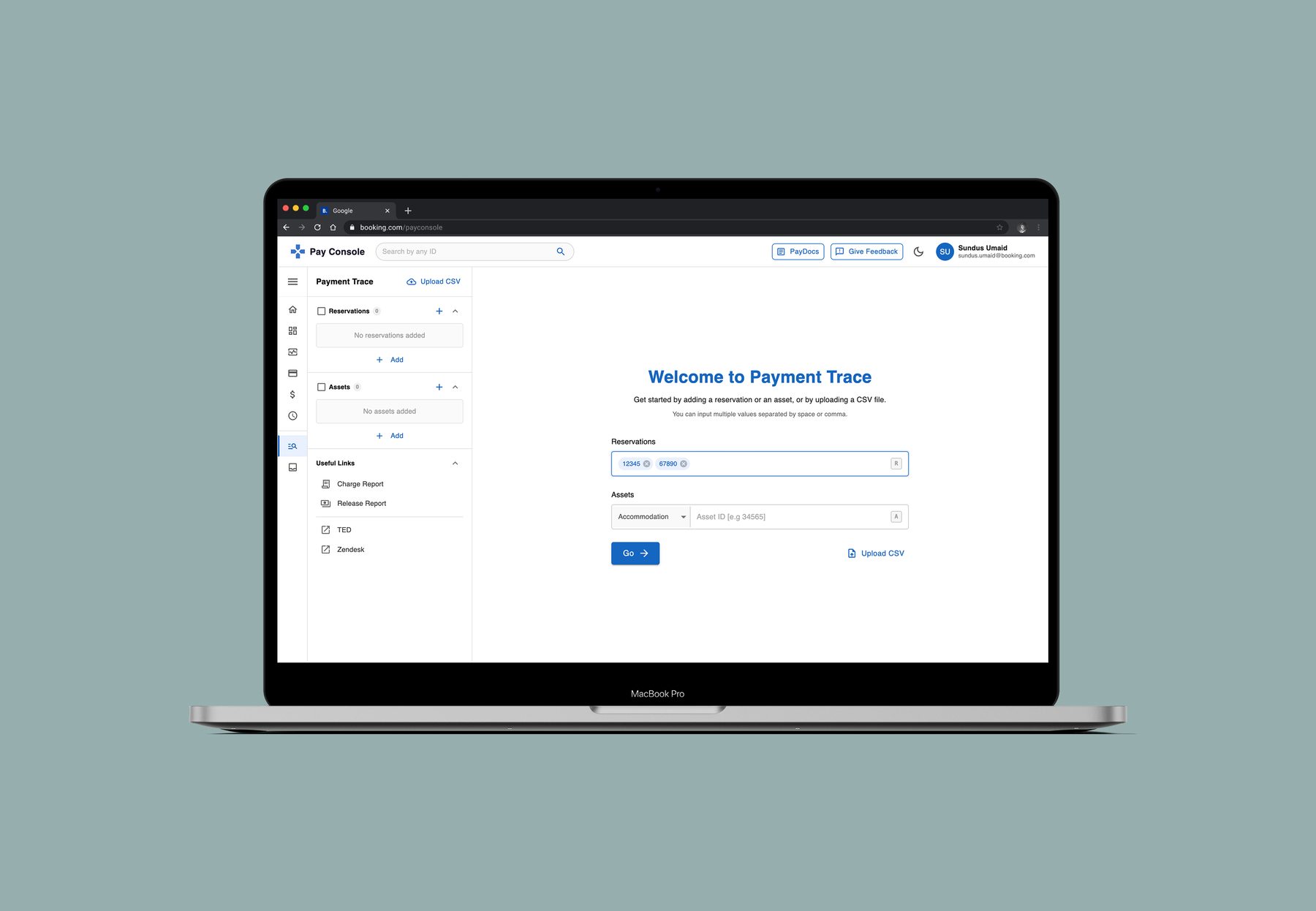
- Multi-parameter search: by reservation ID, PSP transaction ID, or asset ID
- Direct bulk-pasting IDs from spreadsheets
- Upload a CSV file for bulk operations
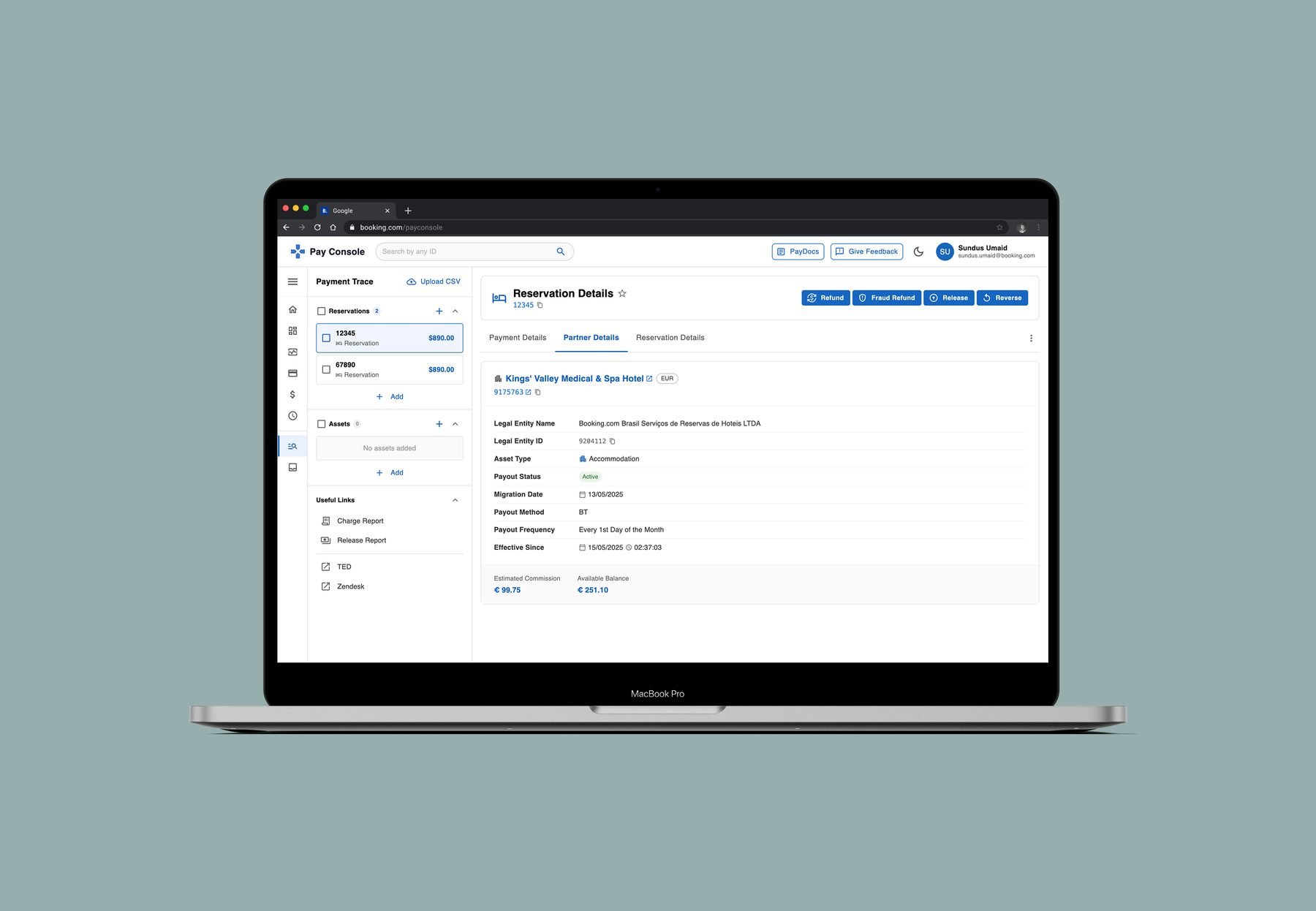
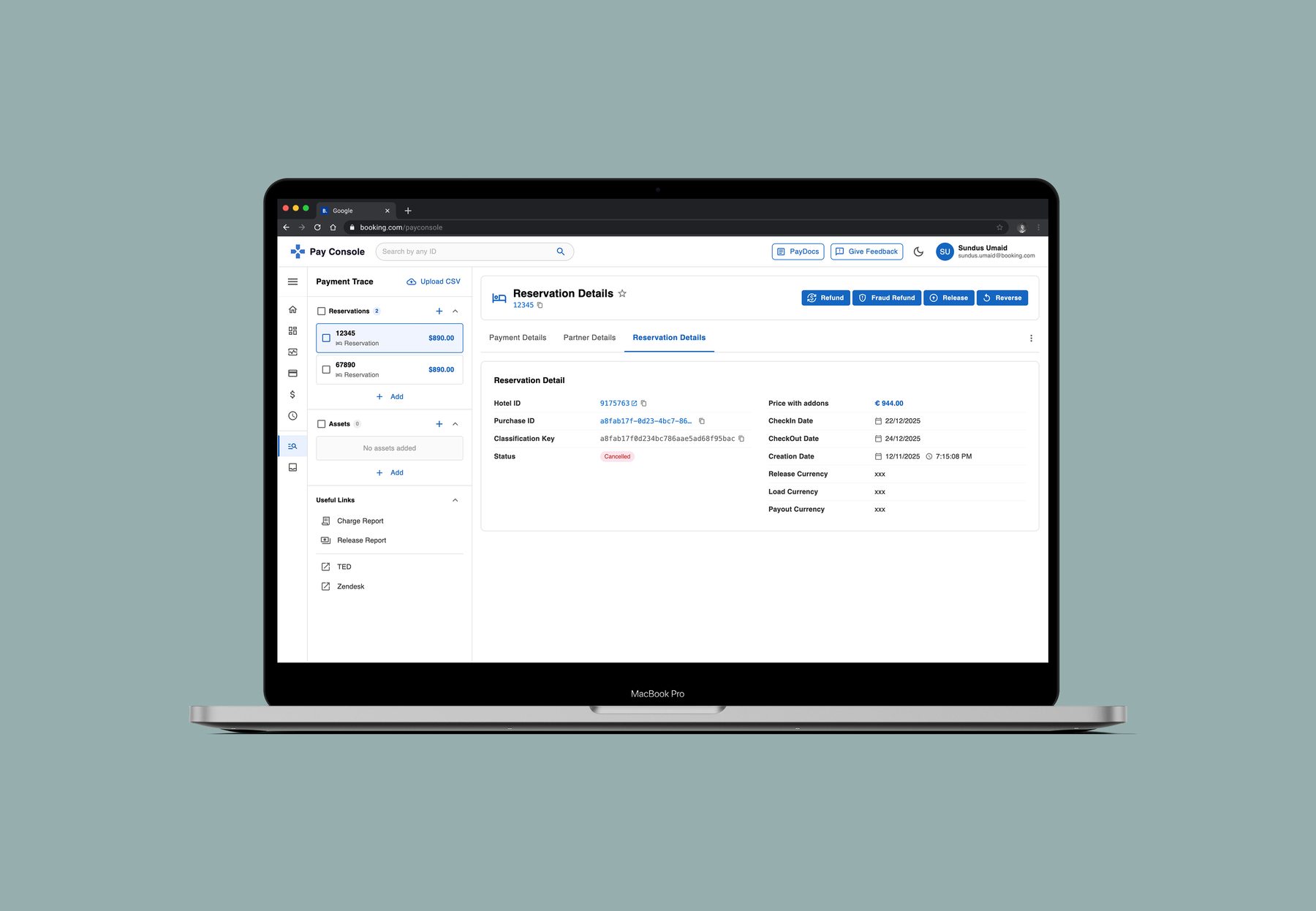
Payment detailed views
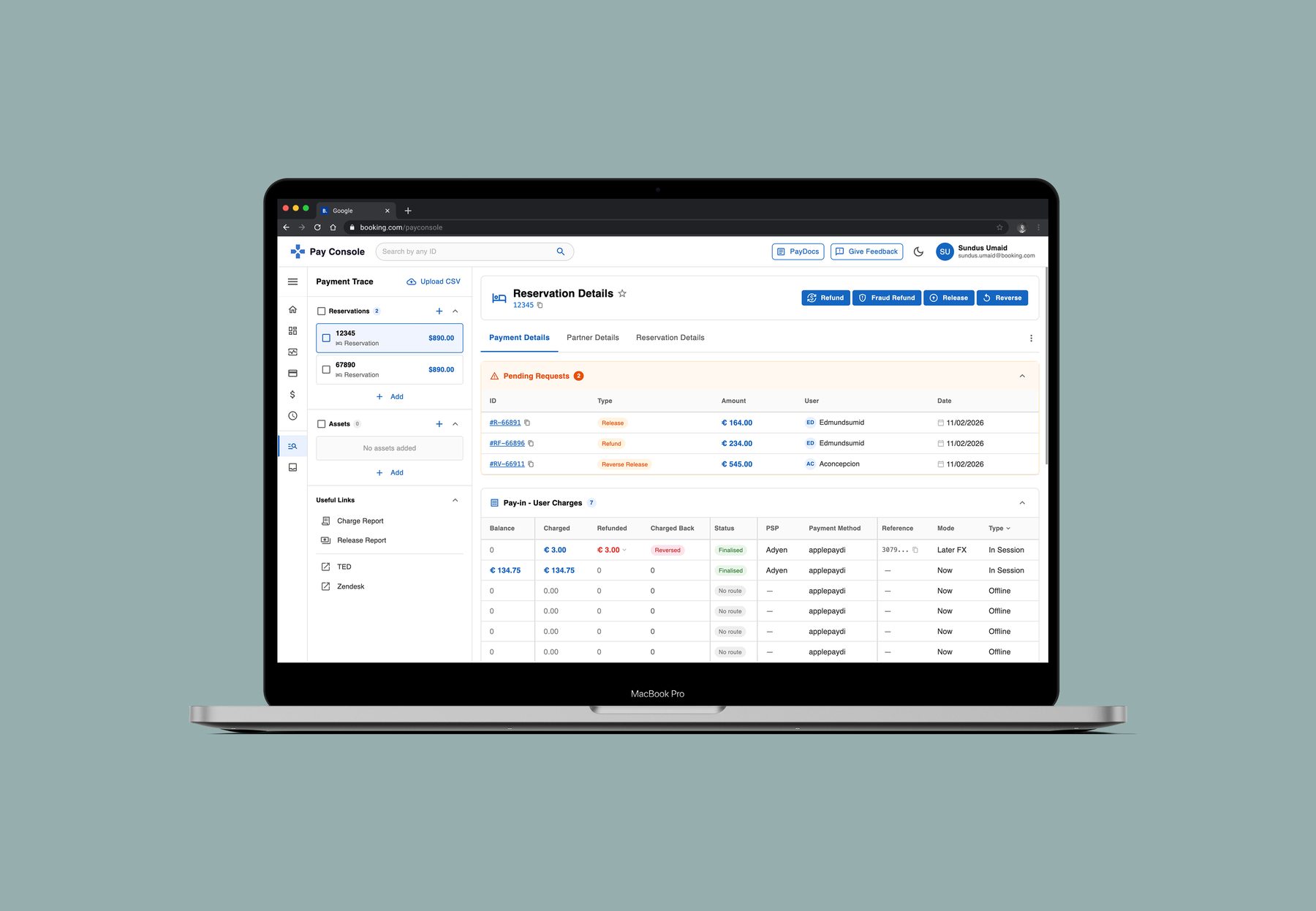
- Reservation details
- Partner details
- Guest payment history
- Guest refund history
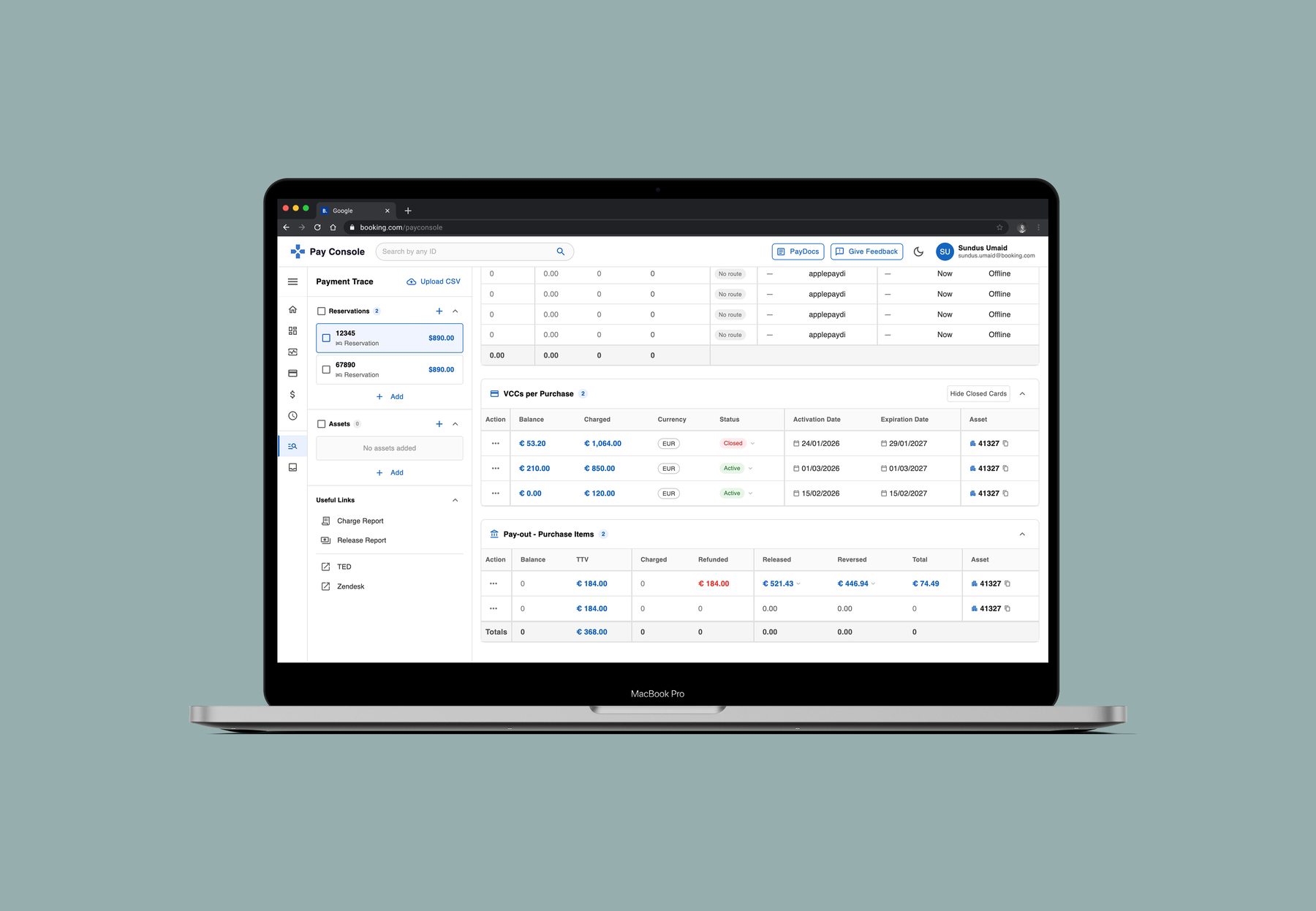
- Partner pay-out history (VCC history, bank transfer history)
Apply financial action
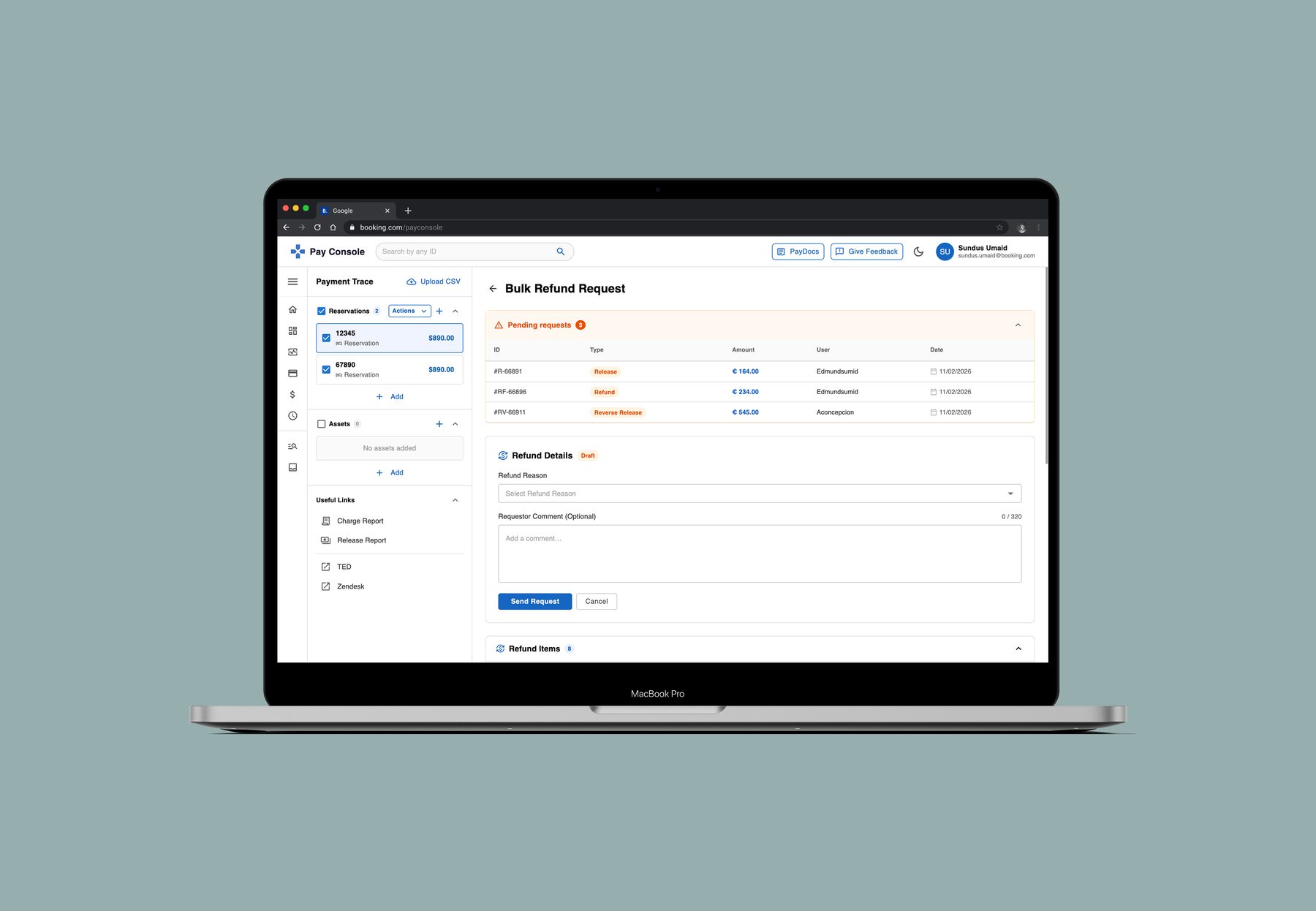
Agents execute financial resolutions, such as guest refunds, releasing partner funds, or reversing payouts in fraud cases.
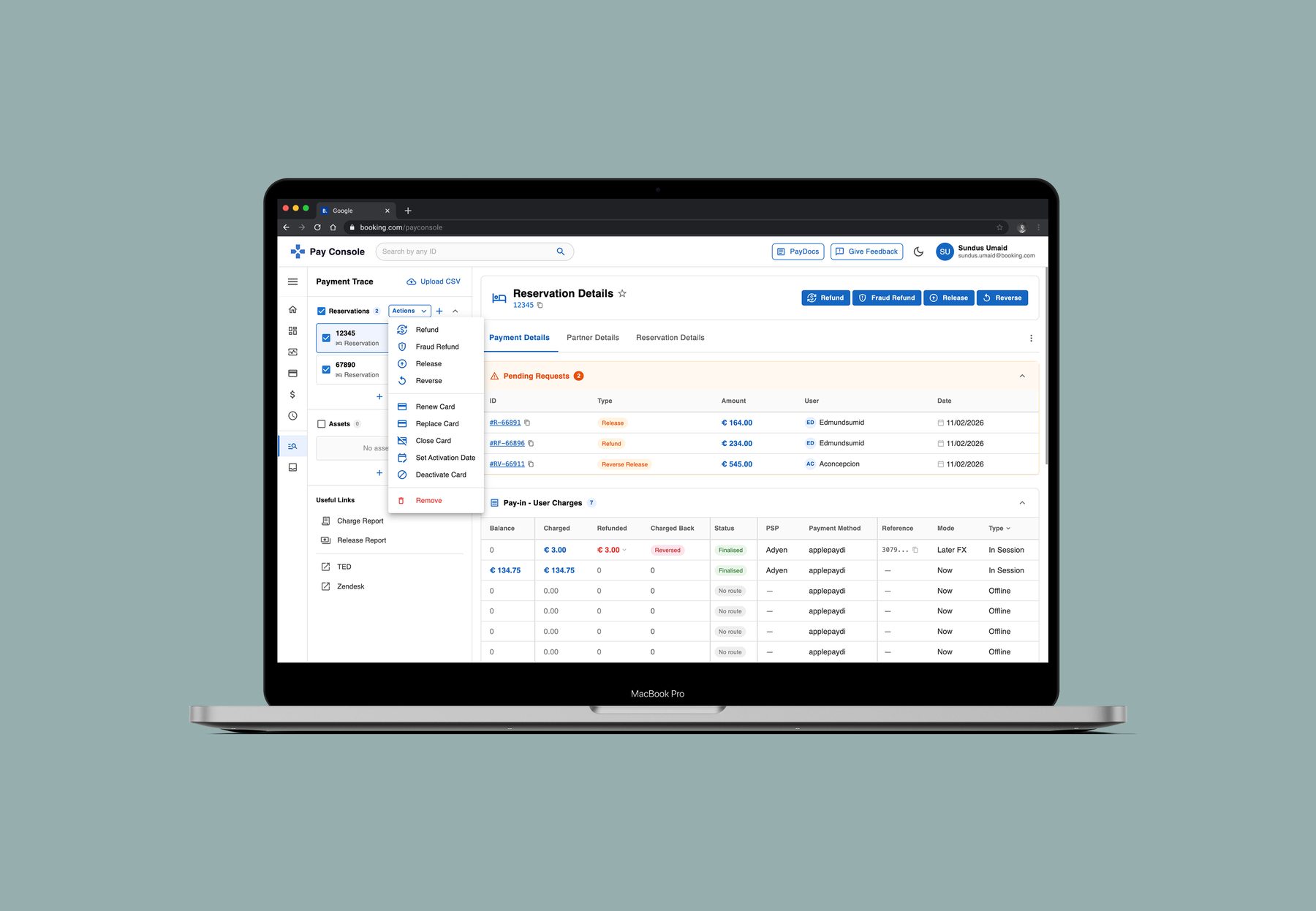
Financial actions
- VCC management: card renewal, replacement, deactivation, activation date shifts, and mass updates
- Payout controls: forced payout releases, reverse releases, and withdrawals
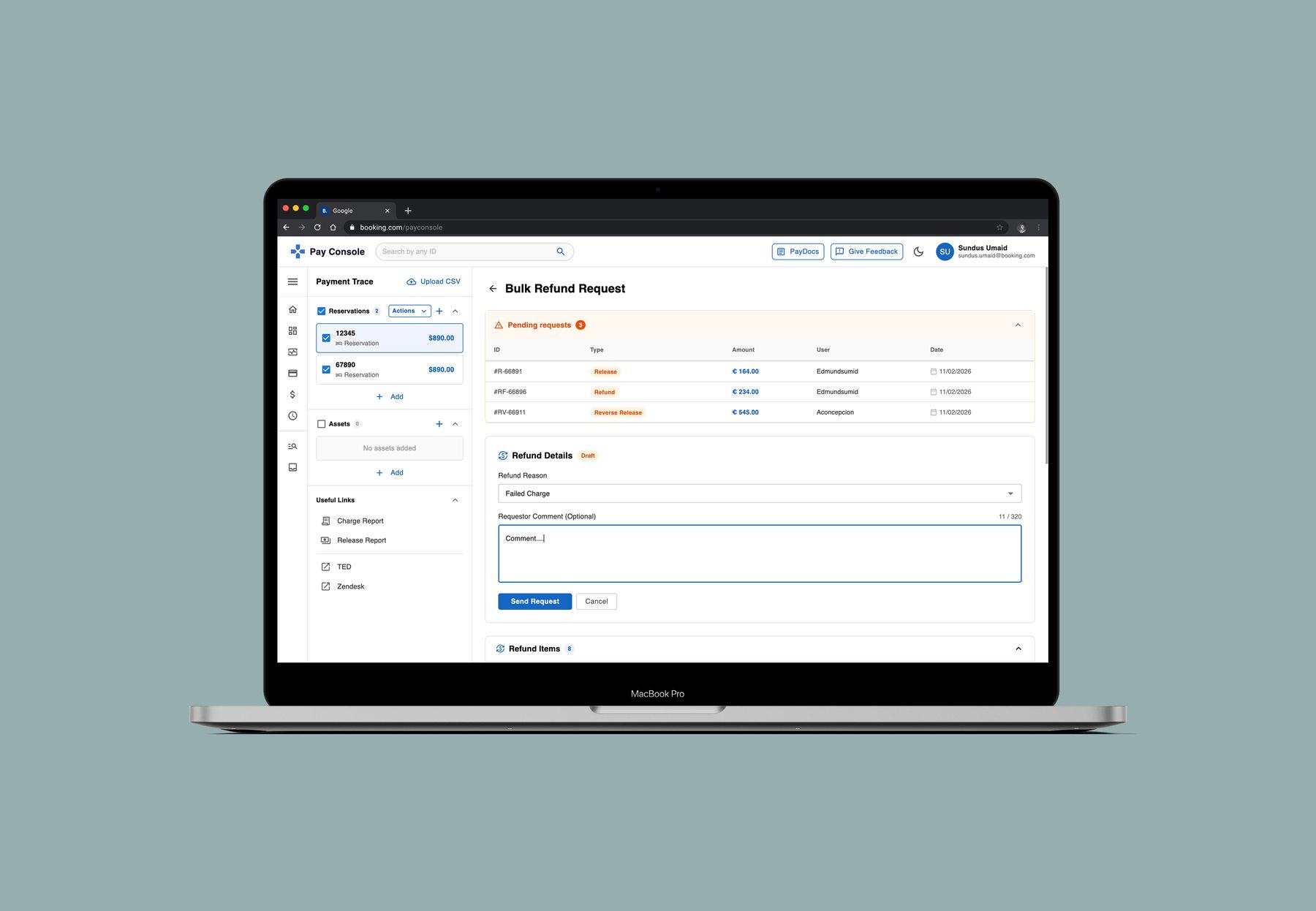
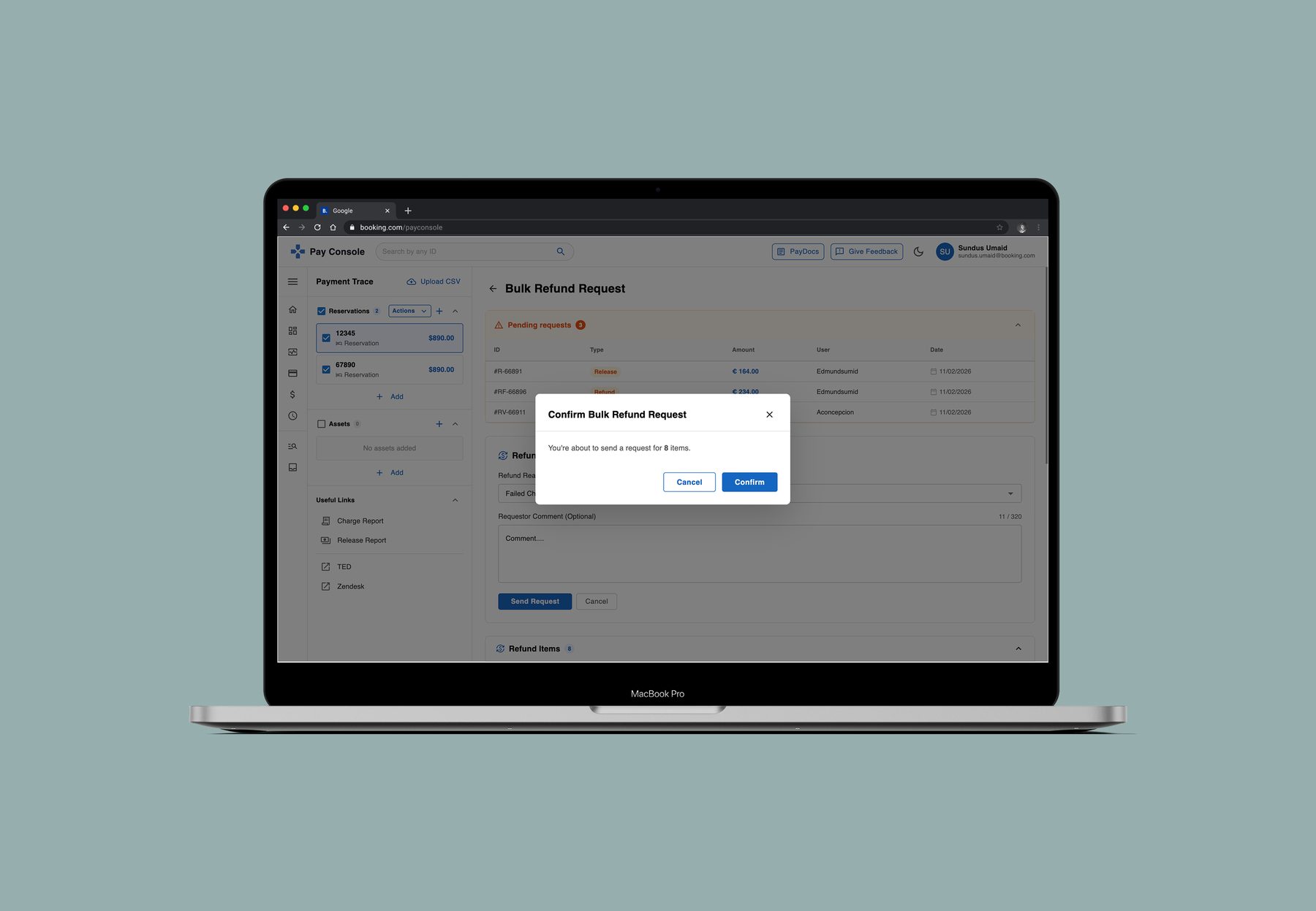
- Refund & dispute engine: line-item guest refunds and partner payout clawbacks
- Fraud safeguards: single-flow actions to cancel, refund, and blocklist compromised accounts
Governance & approval
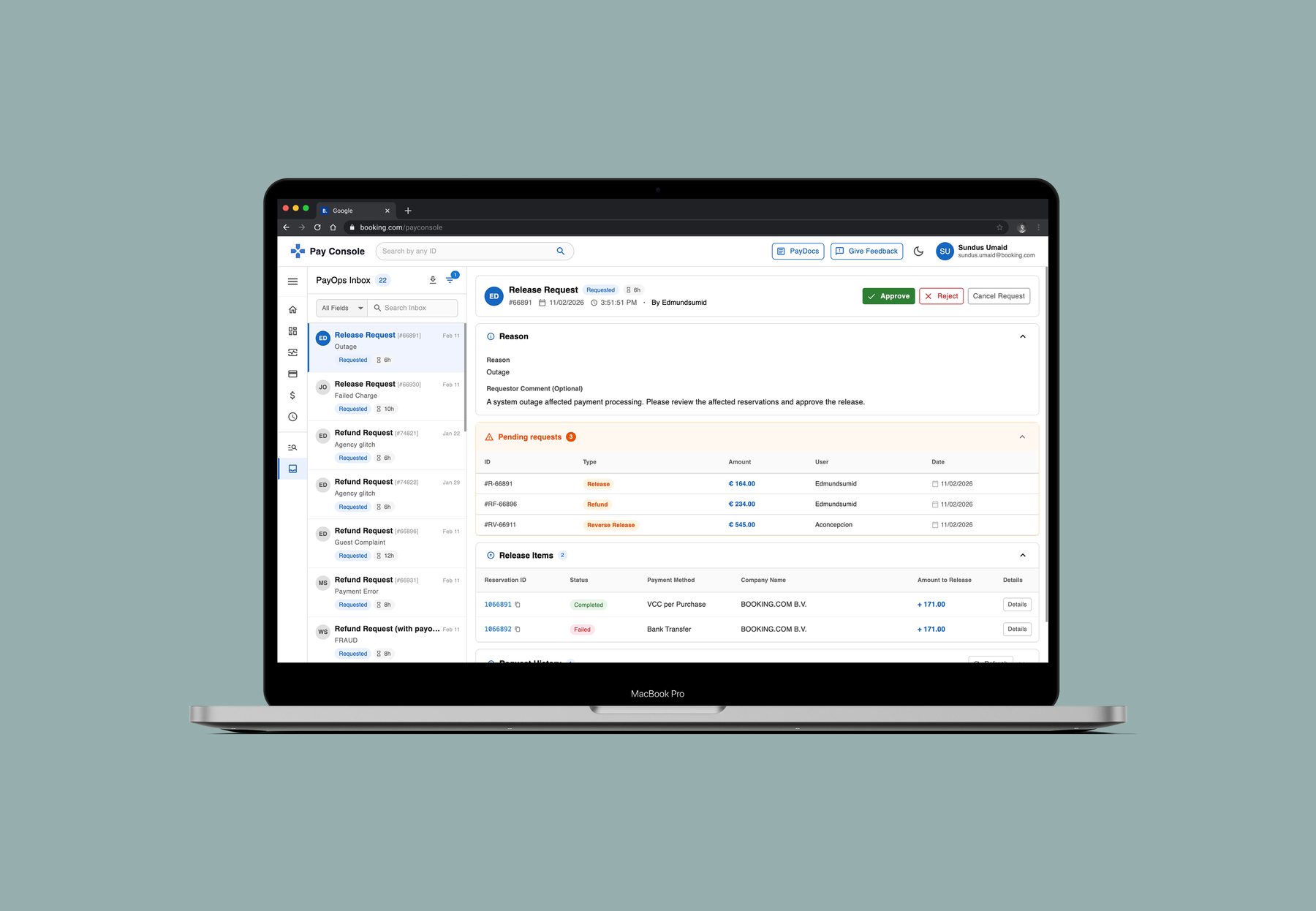
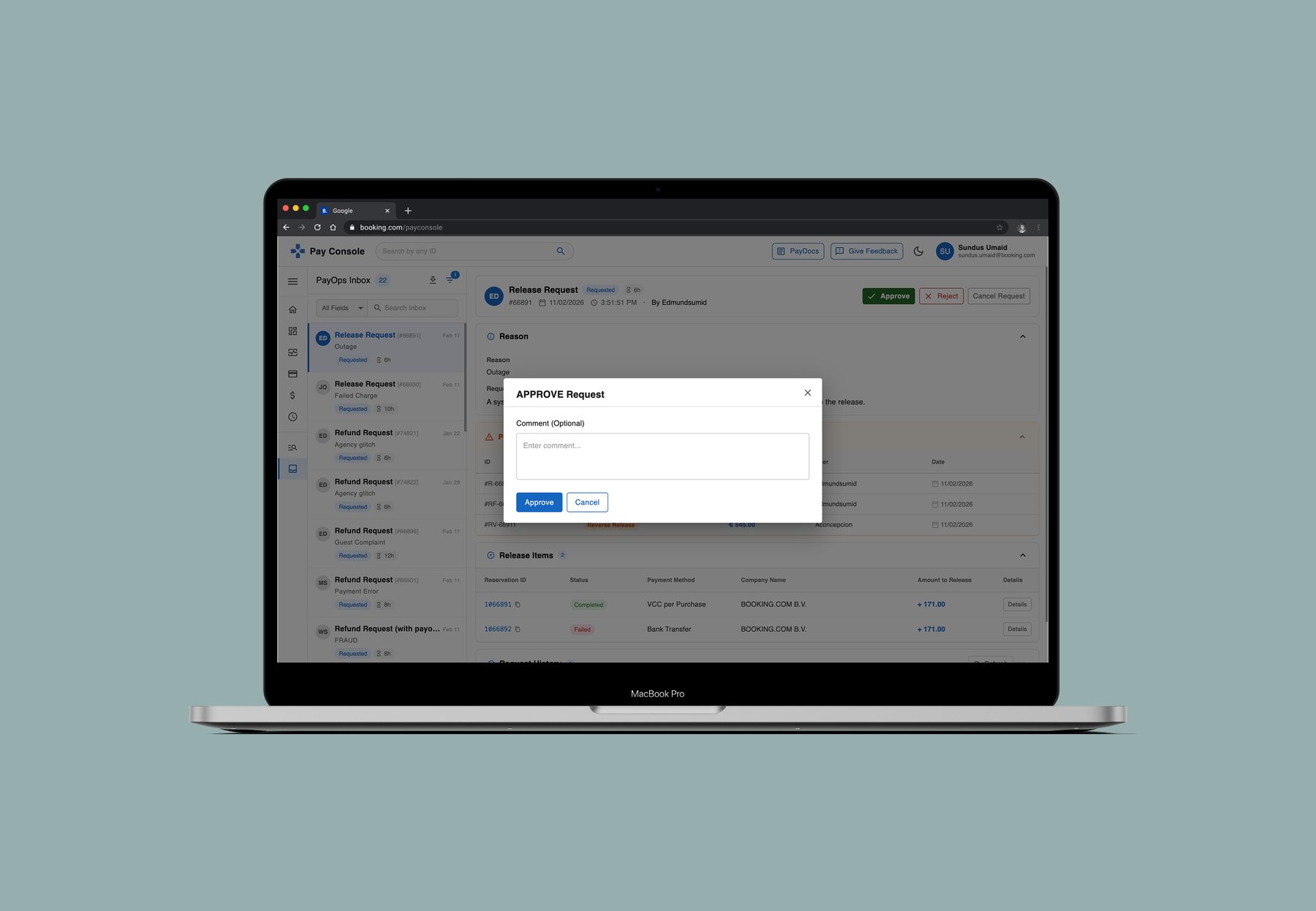
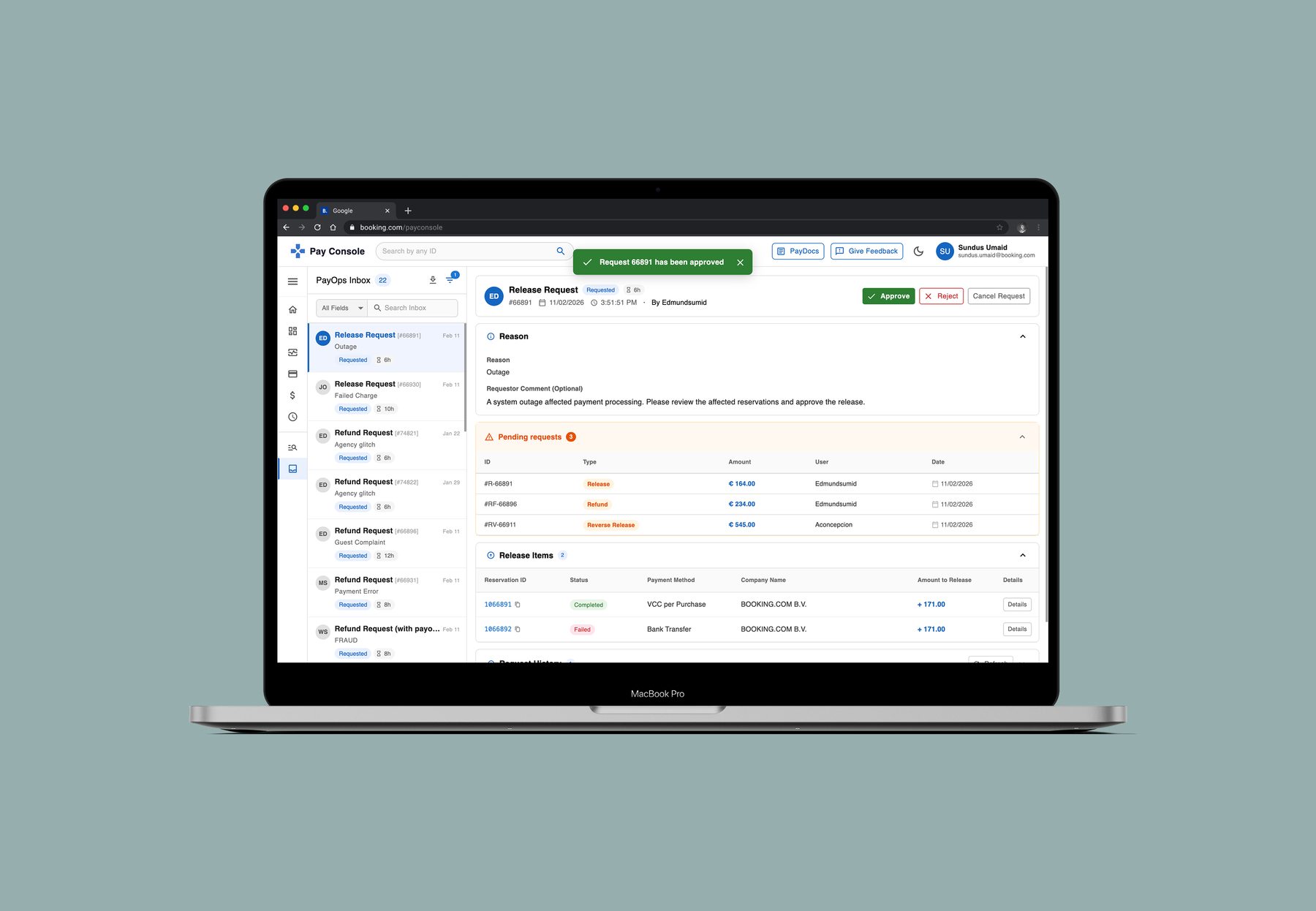
High-risk or loss-making actions require managerial review before execution.
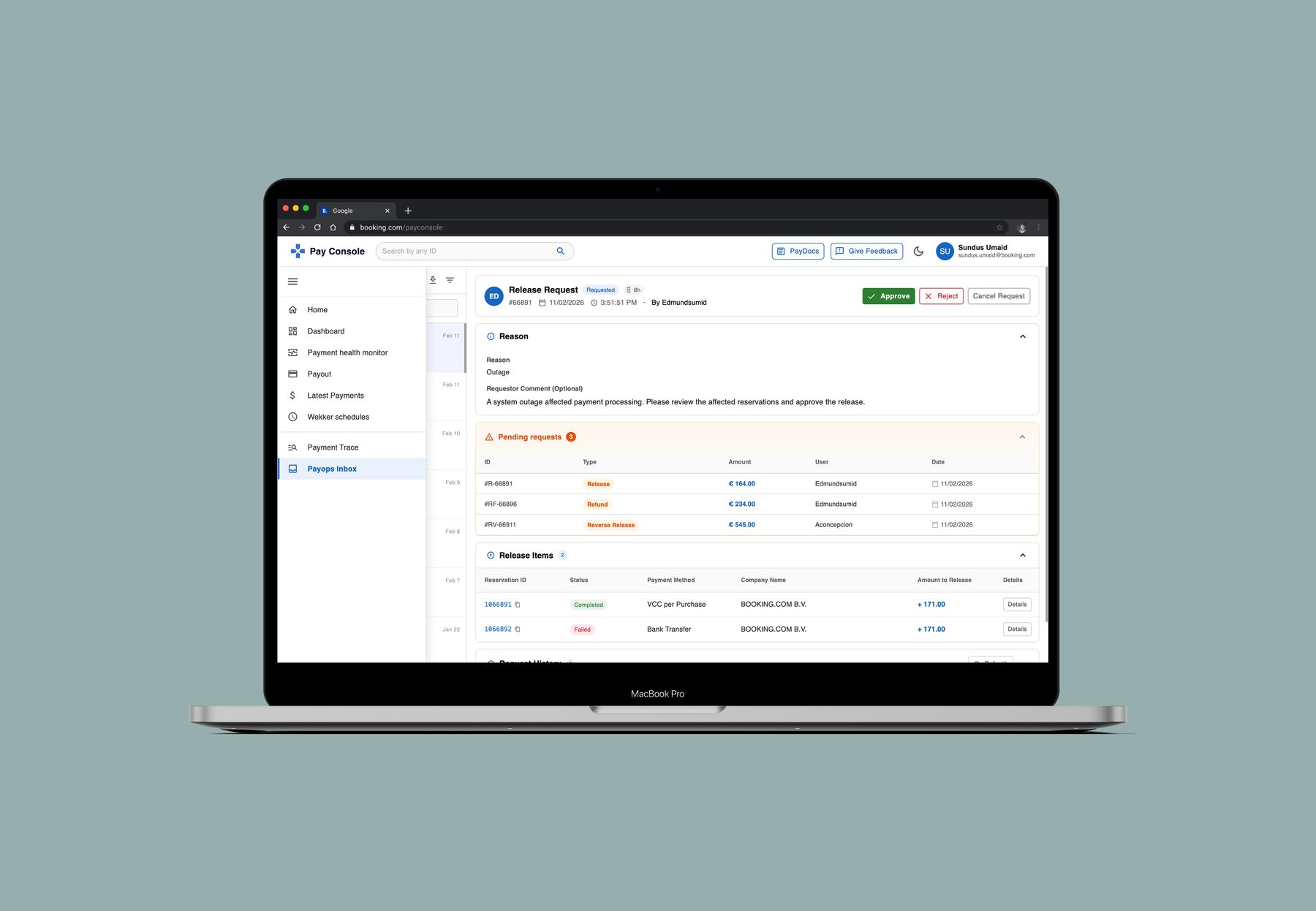
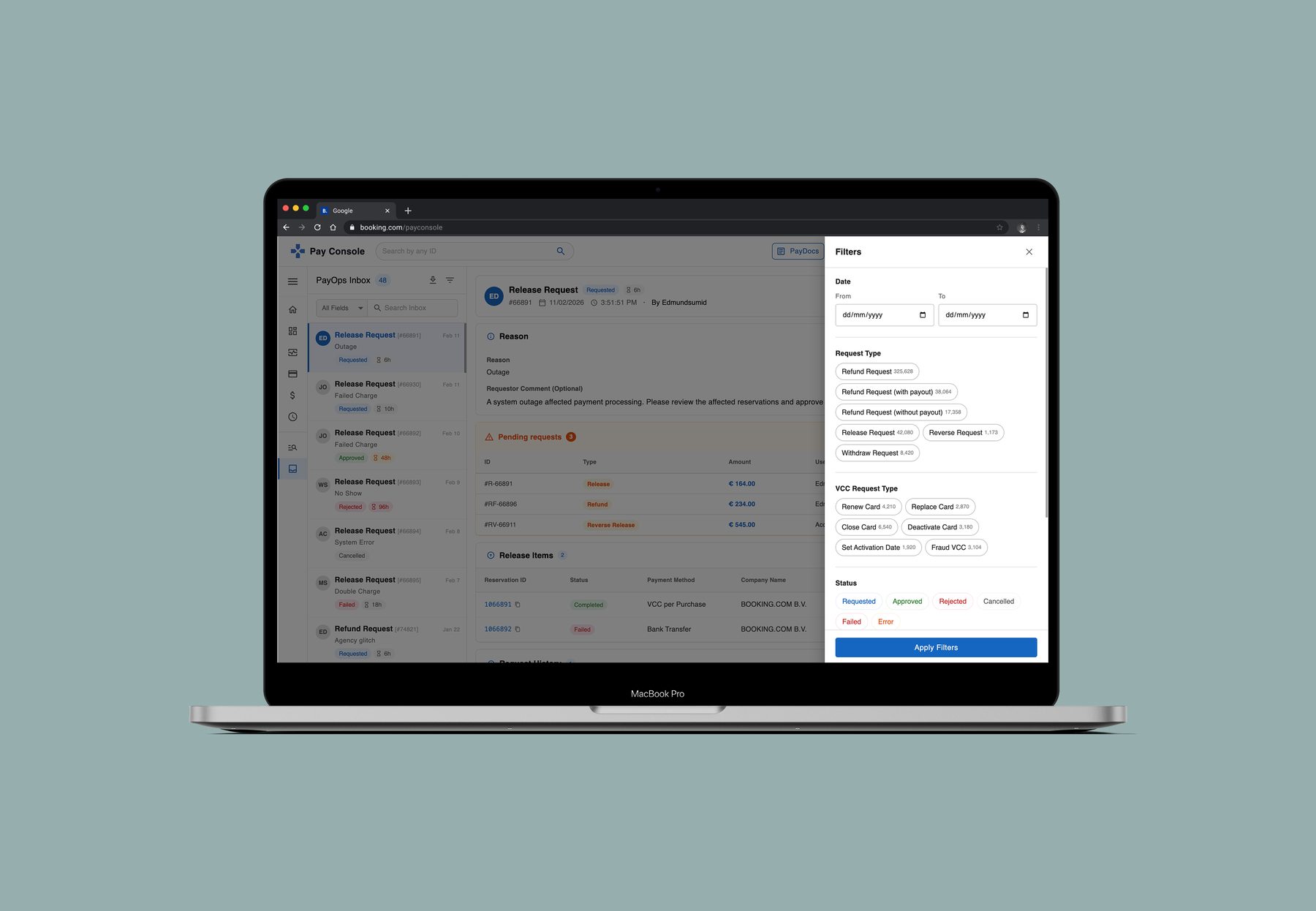
PayOps inbox
- A two-pane approval queue with SLA tracking
- Custom filtered views
- Export options for weekly financial audits
Close loop
Agents record the resolution in the origin ticketing platform and resolve the case.
Audit logging & case return
Automatic event logging back to origin systems to maintain full compliance and operational audit trails.
Feature prioritization workshop
To define the core MVP architecture, I facilitated a feature prioritization workshop with engineering and product leads. We evaluated legacy capabilities based on their operational impact and daily frequency of use, mapping them into a simple "do now vs. do later" matrix.
This ensured we focused immediate engineering effort on high-impact, high-frequency workflows — such as basic VCC management and standard refunds — while deferring specialized edge cases to post-launch iterations.
Design
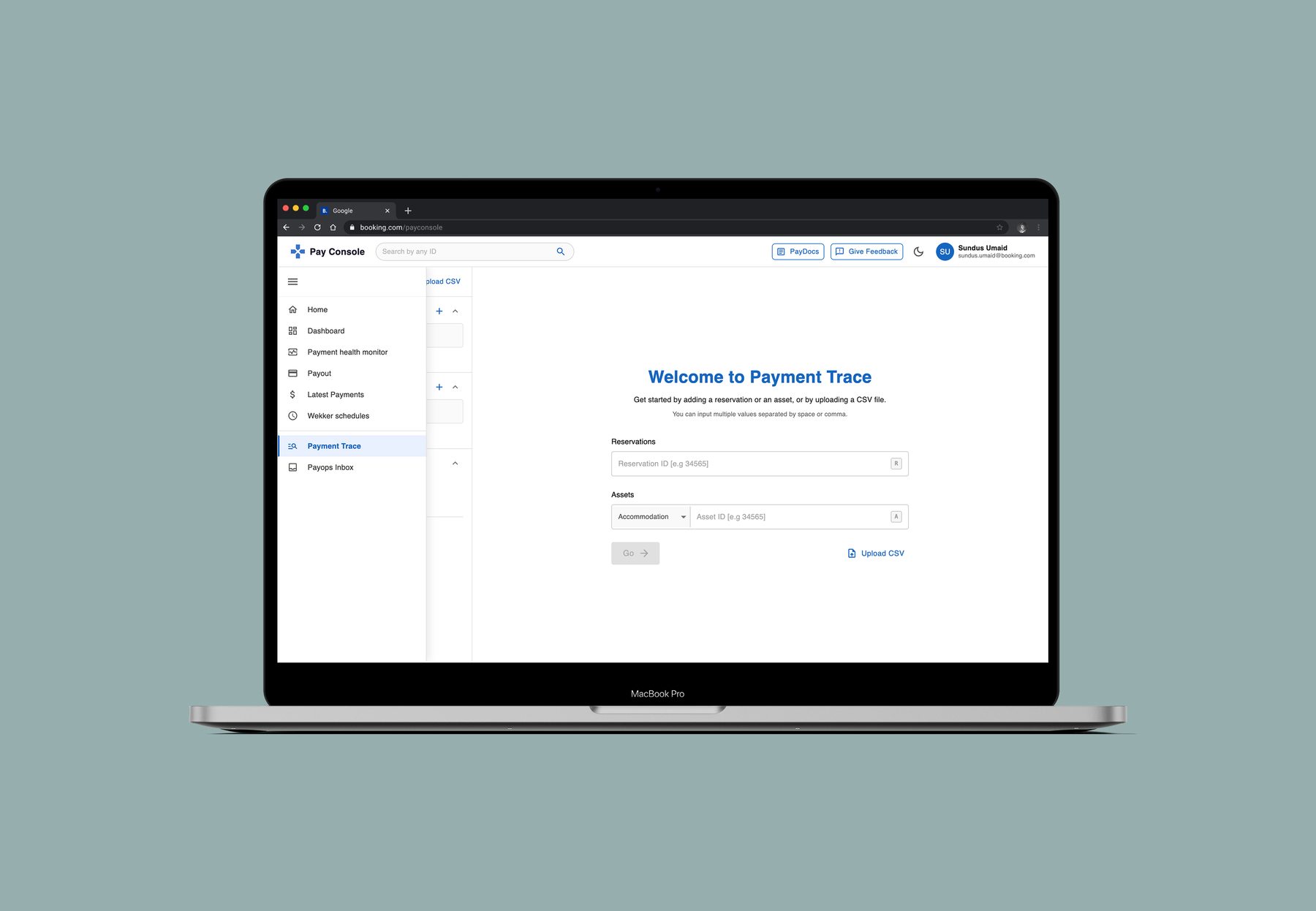
To rapidly test complex financial logic and high-density UI patterns, I used Claude Code to build interactive, stateful code prototypes. This approach enabled realistic validation of edge cases, keyboard navigation, and data-dense tables before engineering handoff.
Paytrace prototype
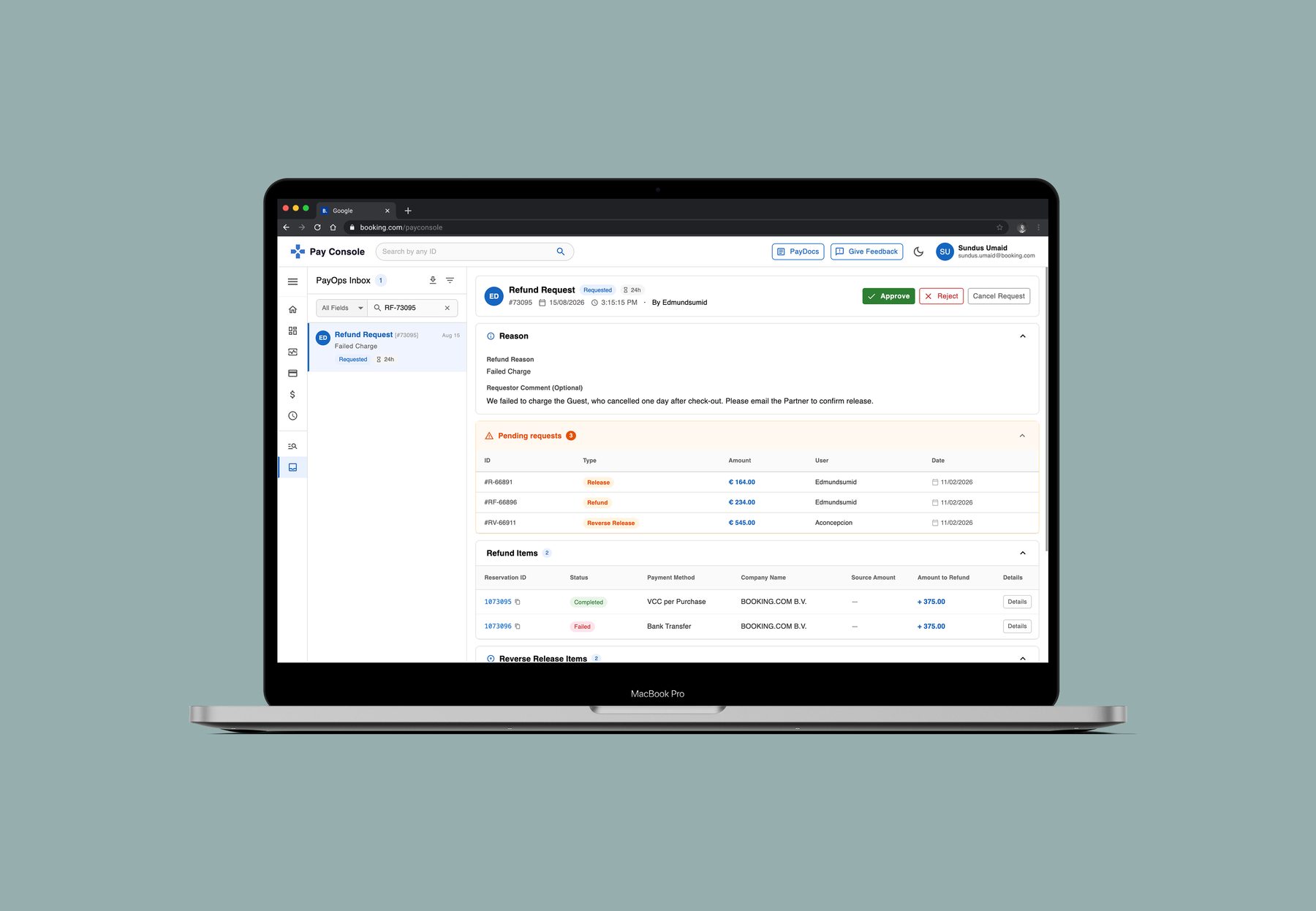
Inbox prototype
Delivery
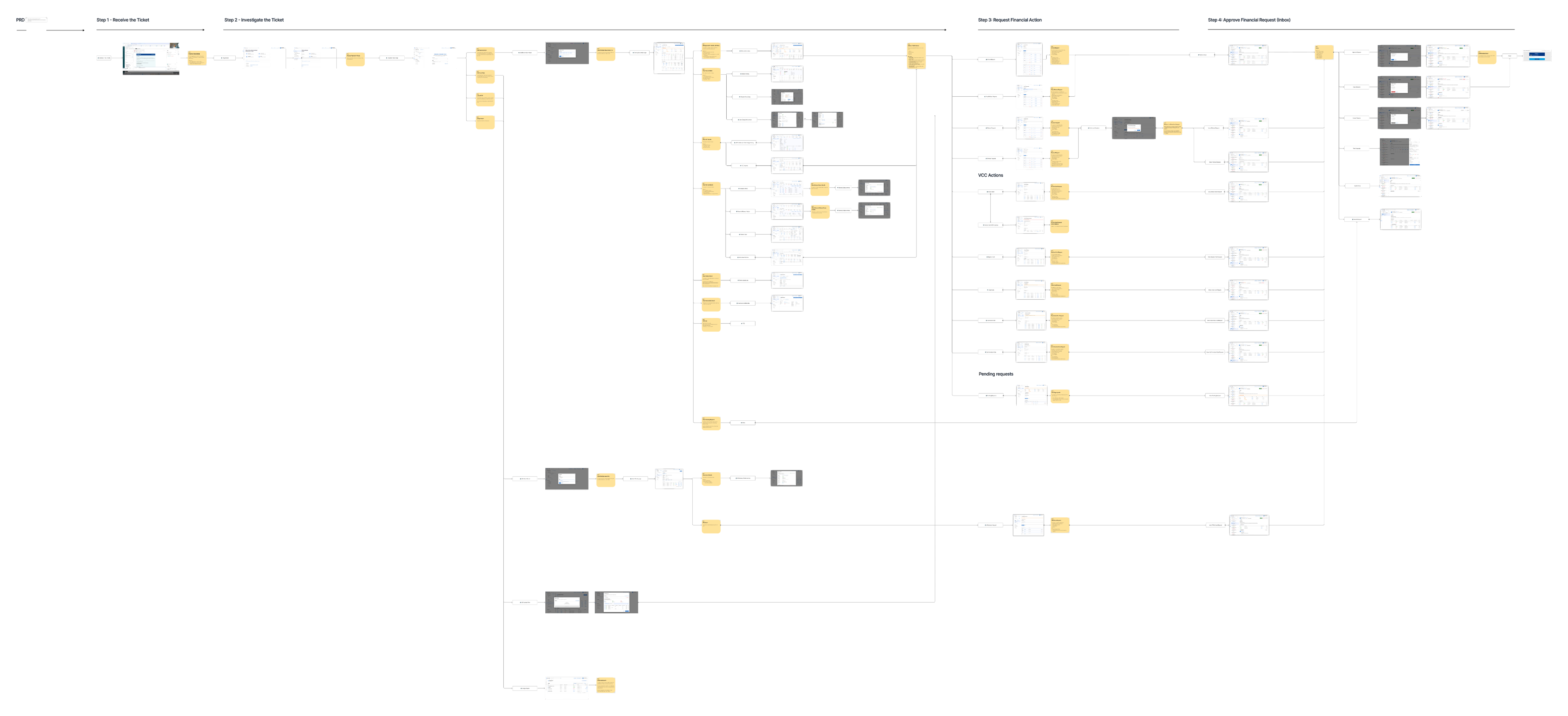
Deliverables included interactive code prototypes, complete screenflow diagrams, and developer specification boards in FigJam to streamline implementation.
Results & reflection
Post-MVP delivery, we conducted structured review and feedback sessions with internal FinOps specialists:
Context-switching reduction: during qualitative feedback sessions, specialists consistently cited an estimated 20–30% reduction in context switching, highlighting fewer tab toggles and streamlined steps across their daily workflows.
Workflow continuity: agents reported a clean, modernized layout that preserved their legacy mental models while removing unnecessary manual verification steps.
Zero disruption: successfully consolidated fragmented workflows into a single system without sacrificing core diagnostic or execution depth.
Accelerated design via code: leveraging AI coding assistants (Claude Code) during high-density enterprise tool design allowed us to test real micro-interactions and complex logic early, dramatically shortening feedback loops with engineering.